
PILONIDAL SINUS: Causes, Symptoms, Best Treatment & LASER Surgery in Kolkata | Complete Guide by Dr. Susenjit Prasad Mahato
PILONIDAL SINUS: Causes, Symptoms, Best Treatment & LASER Surgery
If you have noticed a painful swelling, repeated pus discharge, or a small hole near your tailbone, you may be suffering from Pilonidal Sinus.
Many patients ignore the condition initially because it resembles a boil. Unfortunately, repeated infections often make the disease more painful and complicated over time.
The good news is that modern LASER surgery for Pilonidal Sinus offers a minimally invasive treatment with less pain, faster recovery, and early return to work in suitable patients.
If you have noticed a painful swelling, repeated pus discharge, or a small hole near your tailbone, you may be suffering from Pilonidal Sinus.
Many patients ignore the condition initially because it resembles a boil. Unfortunately, repeated infections often make the disease more painful and complicated over time.
The good news is that modern LASER surgery for Pilonidal Sinus offers a minimally invasive treatment with less pain, faster recovery, and early return to work in suitable patients.
What is Pilonidal Sinus?
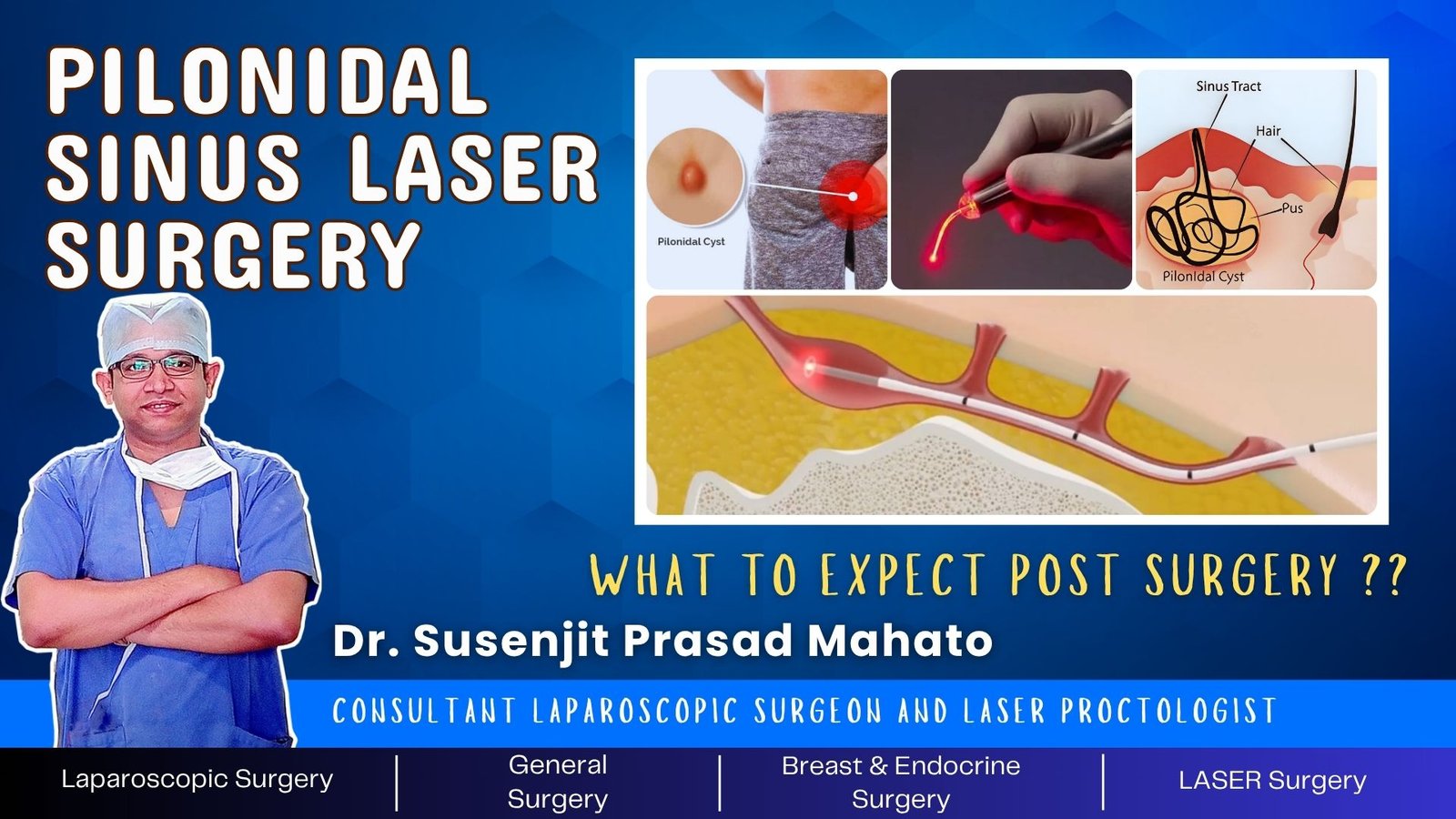
A Pilonidal Sinus is a small tunnel or tract that develops beneath the skin, usually in the cleft between the buttocks near the tailbone (coccyx).
The word “Pilonidal” literally means “nest of hair.”
Loose hair penetrates the skin due to friction and pressure. The body treats these hairs as foreign objects, resulting in chronic inflammation, infection, and eventually the formation of a sinus tract filled with pus and debris.
Without proper treatment, the infection often returns repeatedly.
Why Does Pilonidal Sinus Occur?
Several factors increase the risk of developing a Pilonidal Sinus:
- Excess body hair
- Prolonged sitting
- Obesity
- Excessive sweating
- Friction between buttocks
- Deep natal cleft
- Recurrent skin infections
- Poor hygiene
- Family tendency (less common)
Young men between 15 and 35 years are most commonly affected.
Is Pilonidal Sinus Dangerous?
Although not usually life-threatening, it should never be ignored.
Untreated disease may cause:
- Recurrent abscess
- Continuous pus discharge
- Severe pain
- Multiple sinus openings
- Difficulty sitting
- Repeated antibiotic use
- Rare long-standing complications if neglected for many years
Early treatment prevents these complications.
Early Symptoms of Pilonidal Sinus
Patients commonly notice:
✔ Pain while sitting
✔ Swelling near the tailbone
✔ Small pit or opening
✔ Blood-stained discharge
✔ Pus discharge
✔ Bad smell
✔ Redness
✔ Fever (if abscess develops)
Some patients experience symptoms for years before seeking treatment.
Pilonidal Sinus vs Boil
Many patients confuse Pilonidal Sinus with a boil.
A boil is a temporary skin infection.
A Pilonidal Sinus usually has:
- Recurrent swelling
- One or multiple tiny openings
- Hair inside the tract
- Chronic discharge
- Frequent recurrence
Can Pilonidal Sinus Heal Without Surgery?
Very early infections may temporarily improve with:
- Antibiotics
- Pain medicines
- Hair removal
- Local hygiene
However, once a sinus tract has formed, medicines alone generally cannot eliminate it. Persistent or recurrent disease often requires a procedure to remove or close the tract, with the most appropriate technique depending on the patient’s condition.
When Should You See a Surgeon?
Consult a surgeon immediately if you have:
- Recurrent swelling
- Persistent discharge
- Severe pain
- Fever
- Bleeding
- Difficulty sitting
Early treatment is usually simpler than treating recurrent disease.
How is Pilonidal Sinus Diagnosed?
Diagnosis is usually made through:
- Medical history
- Physical examination
- Inspection of sinus openings
Most patients do not require MRI or ultrasound.
Imaging is generally reserved for complex or recurrent cases.
What is the Best Treatment for Pilonidal Sinus?
Treatment depends on:
- Size of sinus
- Number of tracts
- Previous surgeries
- Infection
- Recurrence
- Patient’s occupation
Available options include:
- Drainage of abscess
- Conventional excision
- Open wound surgery
- Flap surgery
- Endoscopic treatment (EPSiT)
- LASER Pilonidal Sinus Surgery in selected patients
What is LASER Pilonidal Sinus Surgery?
Modern LASER treatment involves:
- Cleaning the sinus tract
- Removing infected tissue
- Passing a radial laser fibre through the tract
- Closing the sinus from inside using laser energy
Unlike conventional open surgery, suitable patients may avoid a large wound or flap procedure, leading to less postoperative discomfort and quicker recovery.
Benefits of LASER Surgery
Compared to conventional surgery, LASER treatment may offer:
- Smaller incision
- Less bleeding
- Less postoperative pain
- Faster recovery
- Earlier return to work
- Better cosmetic outcome
- Short hospital stay
- Lower wound-care burden in appropriate cases
Not every patient is a candidate, so treatment should always be individualized after surgical evaluation.
Is Pilonidal Sinus Surgery Painful?
Most patients are surprised that recovery is much easier than expected.
Modern anaesthesia, advanced surgical techniques and proper pain management significantly reduce discomfort after surgery.
How Long Does Surgery Take?
The procedure usually takes around 30–60 minutes, although the exact duration depends on the complexity of the sinus.
Is Hospitalization Required?
Many patients undergoing minimally invasive treatment can return home the same day or after a short hospital stay, depending on the procedure performed and the surgeon’s advice.
Recovery Timeline After Pilonidal Sinus Surgery
First 24 Hours
- Mild pain
- Walking encouraged
- Oral medications
- Light diet
First Week
- Regular dressing
- Keep wound clean
- Avoid prolonged sitting
Second Week
- Most office workers resume routine work
- Pain decreases significantly
Third to Fourth Week
- Gradual return to exercise as advised
- Continued wound care if needed
Recovery varies based on the surgical technique and the individual patient.
Can I Sit After Surgery?
Yes—but avoid prolonged sitting initially.
Using a soft cushion and taking frequent standing breaks during the first few weeks can improve comfort.
When Can I Drive?
Many patients can resume short-distance driving once they are comfortable sitting, are no longer taking strong pain medication, and can safely control the vehicle. Your surgeon will advise the right timing for your case.
What Should I Eat After Surgery?
A healthy, protein-rich diet supports healing.
Recommended foods include:
- Eggs
- Fish
- Chicken
- Lentils
- Milk
- Fresh fruits
- Vegetables
- Plenty of water
Good hydration also helps prevent constipation and reduces strain during bowel movements.
Can Pilonidal Sinus Come Back?
Yes.
Recurrence can happen with any treatment, but the risk can be reduced by:
- Maintaining hygiene
- Keeping the area dry
- Hair removal if advised
- Weight control
- Avoiding prolonged sitting
- Following postoperative instructions
How to Prevent Recurrence
Simple preventive measures include:
- Daily cleaning
- Hair trimming or laser hair reduction when appropriate
- Wearing loose clothing
- Maintaining ideal body weight
- Staying physically active
- Regular follow-up with your surgeon
Frequently Asked Questions
Is Pilonidal Sinus Cancer?
No. Cancer arising from a pilonidal sinus is extremely rare and usually associated with long-standing, neglected disease.
Is Pilonidal Sinus Hereditary?
It is not considered a hereditary disease, though some people may have anatomical features or hair patterns that increase their risk.
Can It Spread?
The infection does not “spread” throughout the body like cancer, but untreated disease can form multiple sinus tracts and recurrent abscesses.
Does Sitting Cause Pilonidal Sinus?
Prolonged sitting is a risk factor because it increases pressure and friction in the natal cleft.
Dr. Susenjit Prasad Mahato, one of the best laser proctologist in Kolkata, has operated many critical gallstone cases in his prolonged career. He has also treated many complex issues of pilonidal sinus and have done pilonidal sinus surgery in his long career.